

7 Myths About Silicone (and the Truth Behind Them)
What every parent should know about silicone safety
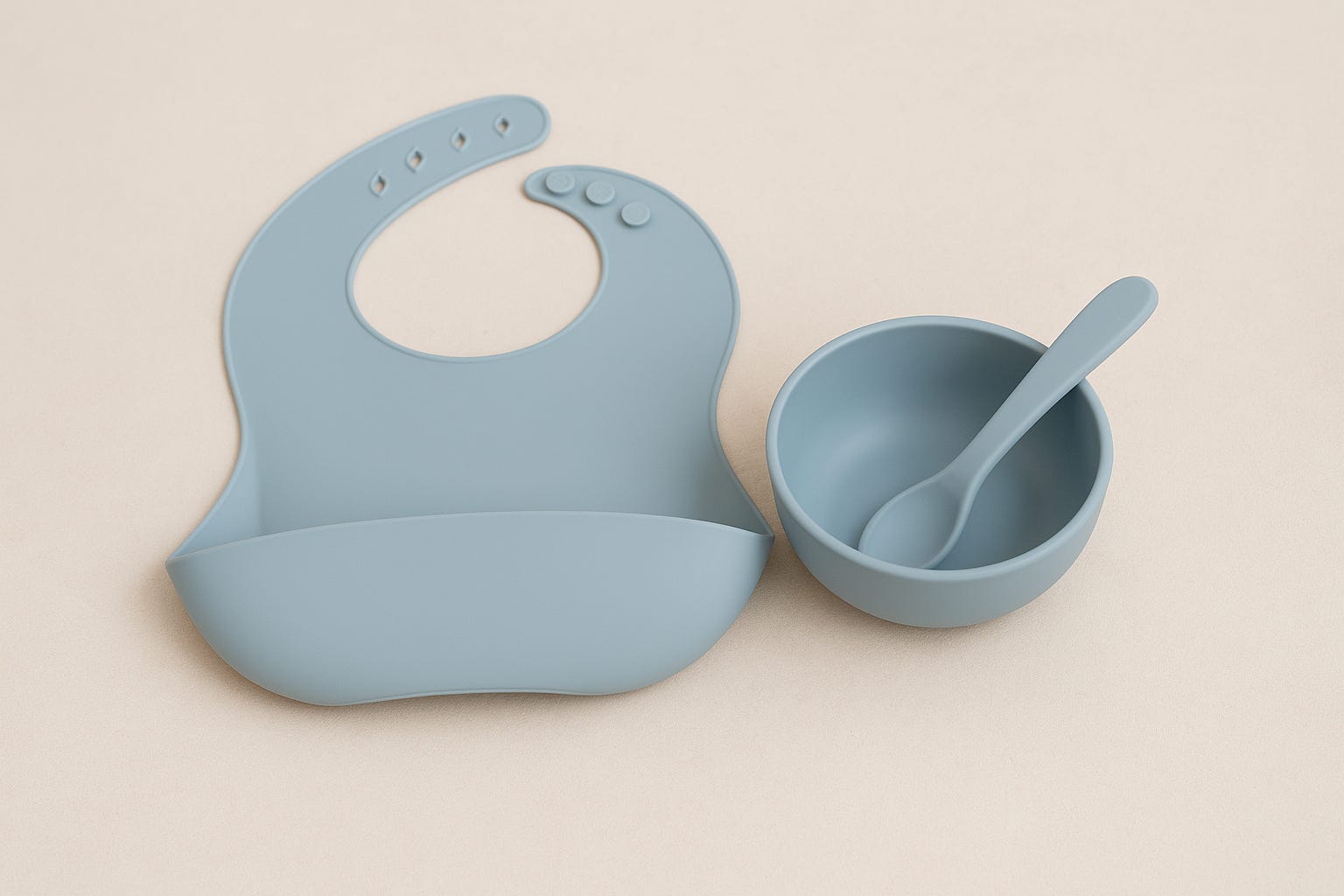
Silicone is one of the most popular choices for baby feeding gear. It’s soft, flexible and durable like plastic, but much more stable. Parents (including us!) appreciate that it’s practical and versatile while being free of the worst problems plastics bring.
But spend five minutes on a parenting forum and you’ll likely see confusing claims about silicone safety. Let us help you sort fact from fiction.
Myth 1: All silicone is the same quality
Truth: Some cheaper products contain fillers that weaken silicone and can leach into food. High-quality silicone is pure, stable, and odorless.
Here’s a quick test you can try with your silicone products: pinch or twist a flat piece and check if it turns white. This test isn’t foolproof, but it may indicate that the product contains fillers.
Myth 2: “BPA-free” means safe
Truth: “BPA-free” only means no BPA. It doesn’t rule out other harmful chemicals or fillers. Look for certified food-grade silicone.
Myth 3: Only “medical-grade” silicone is safe for babies
Truth: “Medical-grade” silicone is an extremely high-purity material used for implants.
For feeding products, “food-grade” silicone is safe when certified to standards like FDA or LFGB.
Myth 4: LFGB is always better than FDA certification
Truth: Both are rigorous safety standards.
FDA compliant (U.S.): Ensures materials are safe for food contact with strict limits on chemical migration.
LFGB certified (Europe): Includes additional sensory testing (taste/odor) and broader chemical panels.
Both certifications guarantee safe baby feeding products. LFGB tests a few extra parameters, but FDA compliance means the product has passed comprehensive safety requirements.
Myth 5: Platinum-cured silicone is a different grade than food-grade
Truth: Platinum curing is a process, not a grade. It uses a platinum catalyst instead of peroxide, creating ultra-pure, stable silicone with virtually no chemical migration.
Food-grade certification is what matters most. Platinum curing is an added quality indicator that some parents look for as an extra assurance of purity.
Myth 6: Silicone releases microplastics when heated
Truth: Microplastics come from petroleum-based plastics. While silicone is synthetic, it’s made from a highly stable silicon-oxygen backbone that’s far less likely to degrade into harmful micro-particles.
Certified food-grade silicone handles extreme heat (typically up to 446°F / 230°C) without breaking down. Strong odors, brittleness, or residue usually indicate cheap silicone with fillers, not true food-grade material. Pure, certified silicone does not shed microplastics — even when heated.
Myth 7: If it’s cheap, it’s a good deal
Truth: Quality silicone manufacturing requires investment. Cheap products often use fillers or poor curing, leading to odors, cracking, or breakdown.
The Bottom Line
Silicone can be one of the safest and most durable materials for baby feeding, if you know what to look for. Keep these checkpoints in mind:
✅ Choose high-quality, odorless, filler-free products
✅ Look for “food-grade,” FDA, or LFGB certifications
✅ Consider platinum-cured silicone for the purest option, when available
✅ Be cautious of suspiciously low prices
We hope dispelling these myths helps you feel confident in choosing silicone products that are truly safe for your family.
👉 Parents, which of these myths about silicone have you come across most often?