

Ranking baby foodware materials
What wins, and what we chose for our family
Here's something we wish we’d known as new parents: the material of your baby’s foodware matters as much as what’s inside. Food and drink touch these materials multiple times daily, making them the most critical pathway for chemicals to enter developing bodies.
When our first baby was born, we used mostly plastic. It was lightweight, durable, and widely available.
When we learned about potential health concerns, we switched to silicone. Silicone was safer than plastic, but odors built up and our toddler started rejecting foods served in it. We realized even “safer” materials have downsides.
Now, pregnant with baby #2, we're synthesizing everything we’ve learned about the pros and cons of different foodware materials.
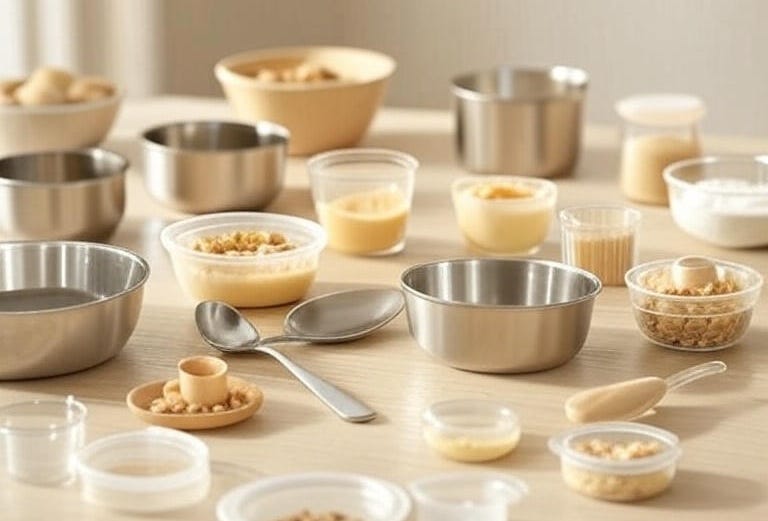
Here's how we score six popular materials on a scale of 1 (problematic) to 5 (excellent) on two dimensions:
Safety: No chemical leaching, food contact safe, stable/inert, well-regulated
Practicality: Durable, convenient, easy to clean and maintain
How different materials score
BPA-Free Plastic:
Safety 2/5 - BPA-free is good, but microplastics and other compounds may still leach when plastic is heated or scratched.
Practicality 4/5 - Lightweight, unbreakable, and widely available, though best to avoid putting it in microwaves or dishwashers.
TOTAL 6/10
Food-Grade Silicone:
Safety 4/5 - High-quality silicone is stable and inert, but lower grades may leach chemicals when heated.
Practicality 4/5 - Lightweight, flexible, and technically dishwasher-safe, but can absorb odors from both foods and dish soap over time.
TOTAL 8/10
Food-Grade Stainless Steel:
Safety 5/5 - Completely inert, never leaches chemicals, and trusted for decades as safe for food contact.
Practicality 4/5 - Ultra-durable and easy to clean, but can’t be microwaved.
TOTAL 9/10
Glass:
Safety 5/5 - Like steel: completely inert with zero chemical leaching.
Practicality 3/5 - Easy to clean, see-through (for liquids) and microwave-safe, but serious breakage risk unless using a protective sleeve.
TOTAL 8/10
Natural Wood:
Safety 5/5 - Naturally non-toxic when properly finished and cared for.
Practicality 2/5 - Durable but high-maintenance: hand-wash only, frequent oiling required. Neither dishwasher- nor microwave-safe.
TOTAL 7/10
Bamboo Composite:
Safety 3/5 - Naturally non-toxic when pure, but composite products typically use melamine binders that can leach chemicals when heated.
Practicality 2/5 - Like wood: durable but high-maintenance.
TOTAL 5/10
What This Means for Your Family
The clear winner? Stainless steel at 9/10, combining unmatched safety with everyday practicality.
Silicone and glass both score 8/10 but with different tradeoffs: silicone's odor accumulation versus glass's breakage risk.
As we prepare for baby #2, we're building around stainless steel for daily essentials, with silicone and glass mixed in for specific needs. Steel delivers the safety and durability we want without maintenance headaches, while silicone and glass each bring their own advantages when used thoughtfully.
Perfect doesn't exist in baby foodware, but informed choices do. For families looking to go plastic-free without sacrificing function, this combination approach works: prioritize steel for everyday use, then add other materials where they make sense for your family.
What's been your experience with non-plastic foodware? We'd love to hear!