

Self-Feeding Could Be Your Baby's Superpower
Why you should let your little one lead the way
When our son was born, we decided we wanted him to develop as much independence as possible. This led us to self-feeding, also known as “baby-led weaning,” despite knowing it would mean messy mealtimes!
Around his first birthday, we started giving our son oatmeal for breakfast. It was fascinating to watch him gradually learn how to tuck into his bowl of oatmeal on his own: grasp the spoon, scoop oatmeal, bring it to his mouth, and swallow just the right amount.
Today, he is capable of eating his whole meal on his own.
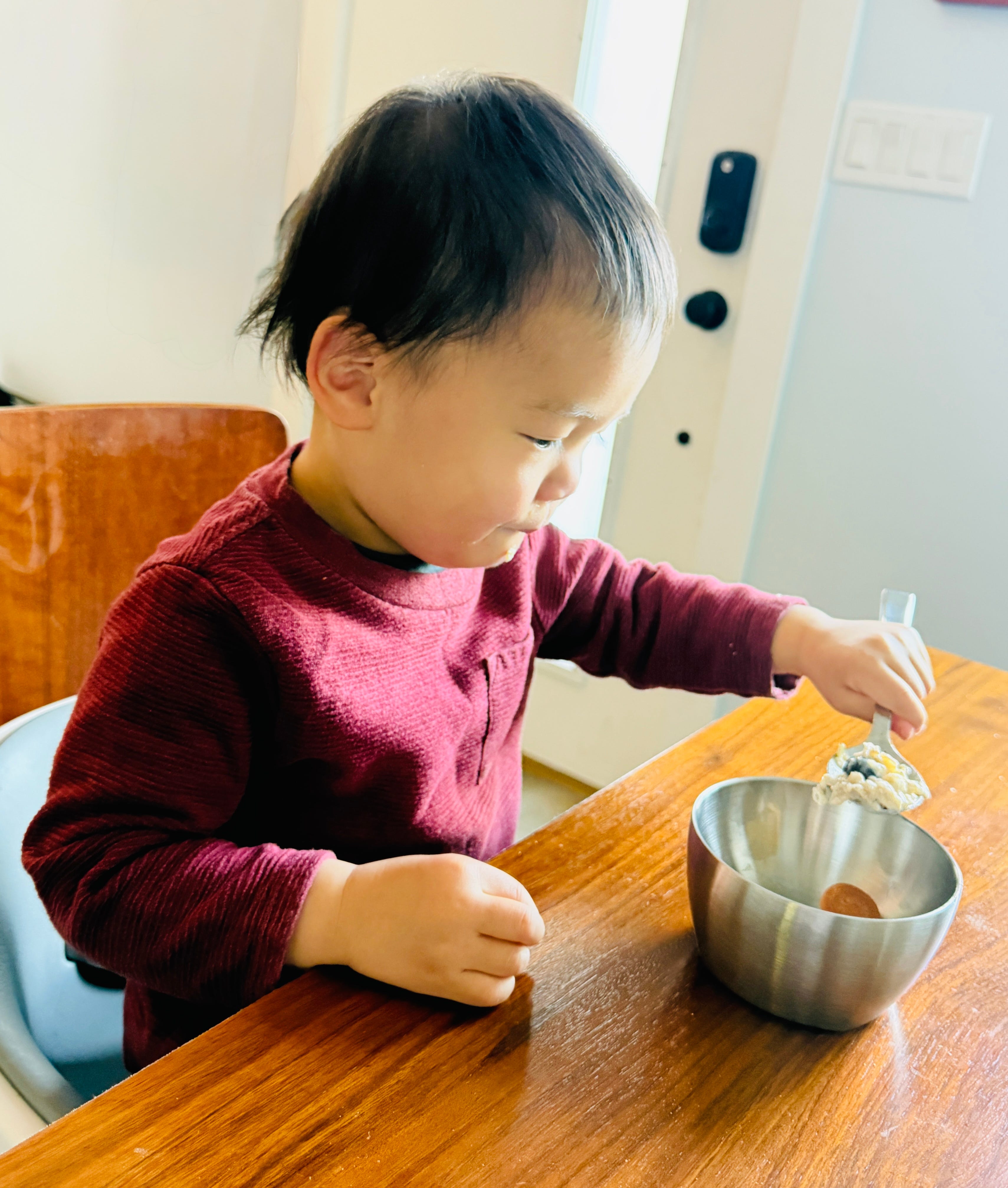
We are convinced that self-feeding sets a good foundation for lifelong healthy eating habits. Here's what we’ve learned about the benefits of this approach.
Physical Development
Motor Development: Grabbing, pinching, and bringing food to mouth builds crucial fine motor skills. Practicing at every meal reinforces neural pathways for precision movements, while grip strength improves through natural, purposeful practice.
Oral Skills: Self-feeding naturally strengthens oral muscles needed for eating and speech. Lateralization skills develop as babies move food side-to-side in their mouth, while gagging (a protective reflex) becomes stronger over time.
Self-Regulation
Appetite Control: Baby-led weaning emphasizes letting the baby learn and express their hunger and fullness cues rather than controlling their intake. This helps babies develop stronger internal hunger signals, potentially preventing overeating and reducing obesity risk.
Encouraging Openness to Food: Letting babies choose from varied tastes and textures may help prevent picky eating later on, as this approach empowers them to explore and develop curiosity about different foods at their own pace.
Social and Emotional Growth
Family Connection: Self-feeding lets babies join family meals from the start, where they learn by watching and copying others. This makes mealtime a space for shared experience and bonding, not just eating.
Independence Building: By actively participating in their own feeding, children build a strong sense of agency and self-confidence. This not only aligns with Montessori principles but also has practical benefits, such as making family outings to restaurants easier and more enjoyable since children can manage themselves better.
Addressing Common Concerns
“Is it unsafe?” With thoughtful food preparation and supervision, self-feeding is just as safe as traditional feeding. We learned to offer appropriately sized, soft foods and always stayed nearby during mealtimes.
“It's so messy!” True, self-feeding is messy at first! Our son loved to grab his bowl and shake food everywhere. 😮💨 We discovered that using stainless steel bowls and plates with a strong suction base helped minimize this mess. As our son matured and learned to focus more on eating than playing, mealtimes became less chaotic.
“Will my baby get enough nutrition?” Rather than counting calories or obsessing over nutrients, we offered diverse, nutrient-rich foods and trusted our son's natural hunger cues. Some days he ate more, some days less, and that was perfectly normal.
Have you tried self-feeding with your little one? What was your experience?